At a young age, I discovered that there is a great deal of complexity in the natural world that often goes unnoticed. This complexity may be tucked under a log or it may be out in the open but too small to make out. To uncover the intricate details of your surroundings you might need to lie on your belly on the forest floor or to hold very still and wait for the unexpected to unfold.
At the time of his death, Charles Darwin had a copy of Gregor Mendel’s Experiments on Plant Hybridization unopened on his bookshelf. If Darwin had opened it, he would have found that the publication contained the answer to one of the central evolutionary mysteries which had long puzzled him–the mechanism for how traits are inherited.
I often wonder what unopened volumes are to be found in our collective backyards, and what mysteries we might unravel by simply taking time to look closely at the world that surrounds us. I grew up watching Mutual of Omaha’s Wild Kingdom where scenes of lions hunting giraffe left a strong impression on me. I’ve come to realize since that this sort of ecological drama plays out perpetually on the smallest of scales.
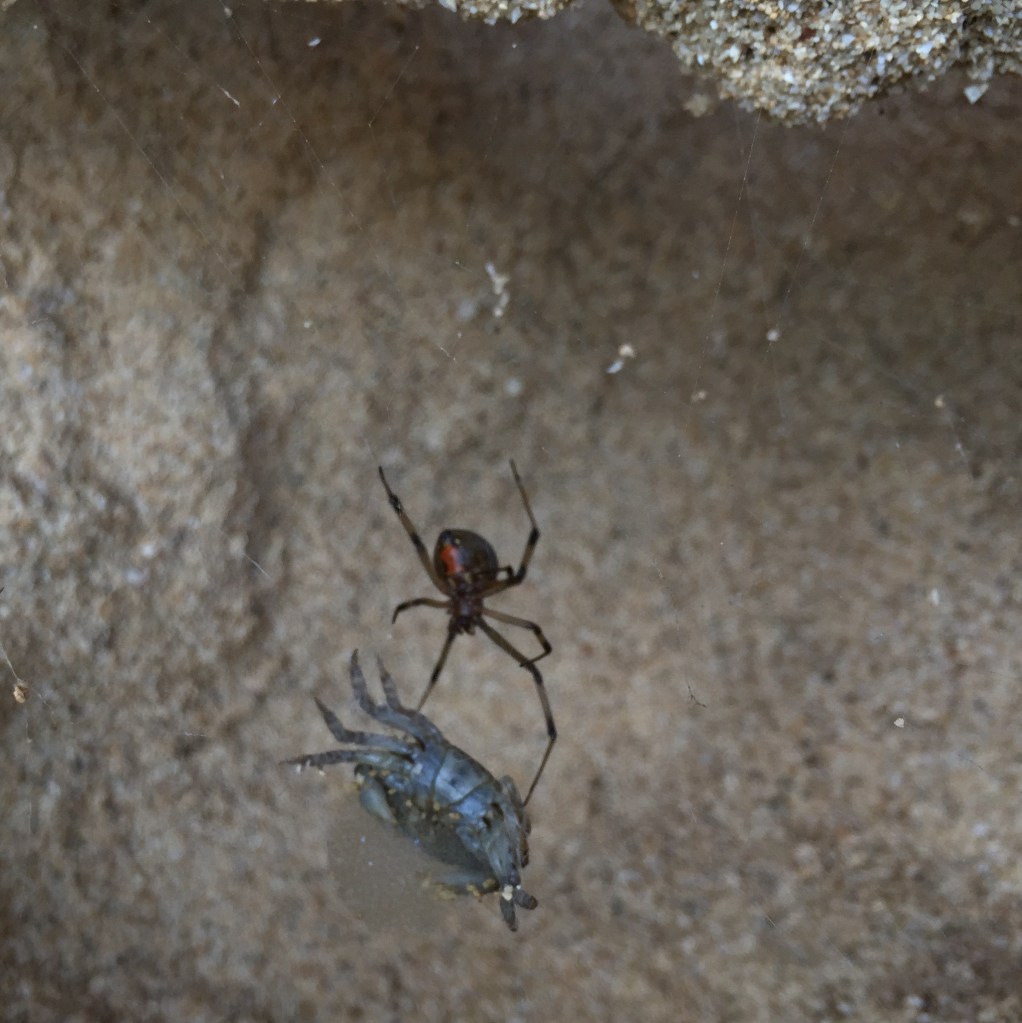
One day, after exploring near the tide pools below Diamond Head, I happened upon a brown widow that had captured a crab in its web and I took this photo with my phone. I’m not sure if this has been documented before, but a search on the internet at the time didn’t turn up any hits. It seems like quite a large meal for a spider, and how exactly does the widow manage to get through the shell?
Another day, at the same beach, I noticed a honeybee stumbling about on the sand. I had just gotten my camera ready when a crab suddenly appeared and ambushed the bee. As you can see, the crab’s coloration was an exact match to the particular mix of sand grains that made up this beach. Were it not for the bee, I never would have spotted the crab.
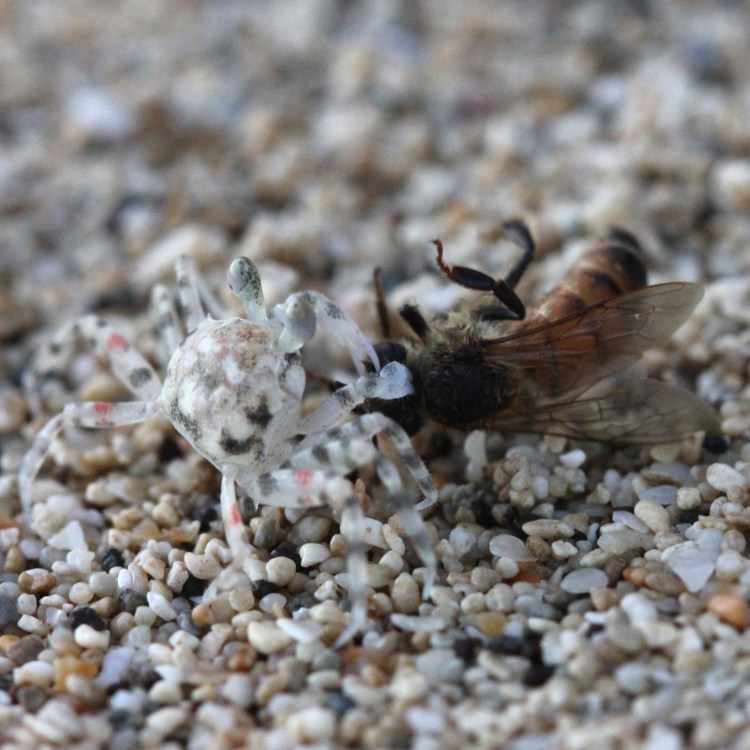
The crab seemed to have the upper claw at first,
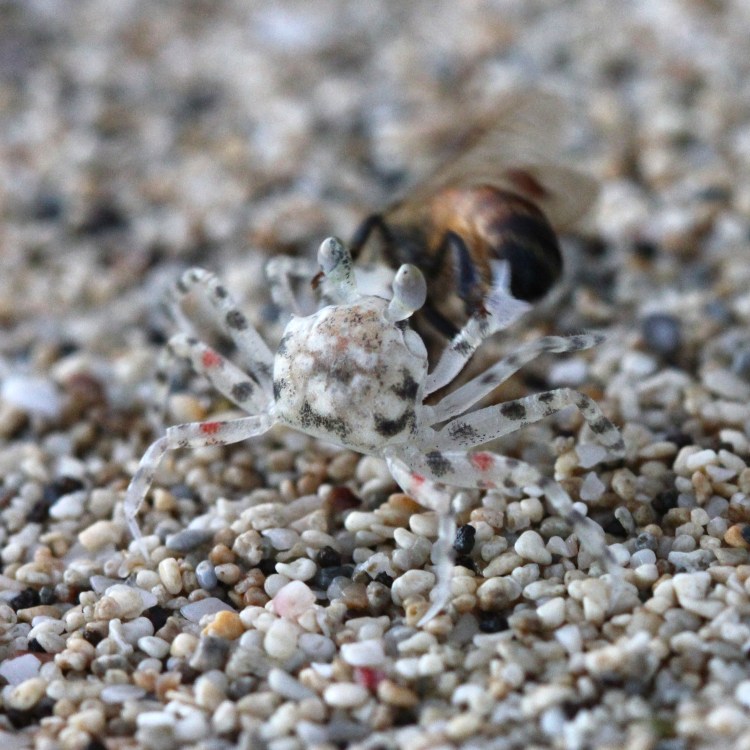
but the bee still had some fight left in it,
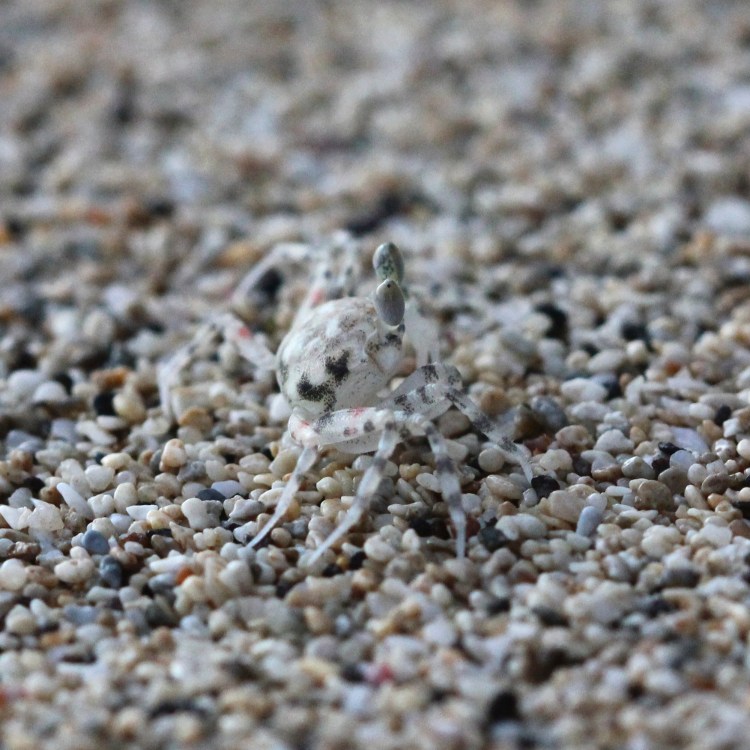
and ultimately managed to break free.
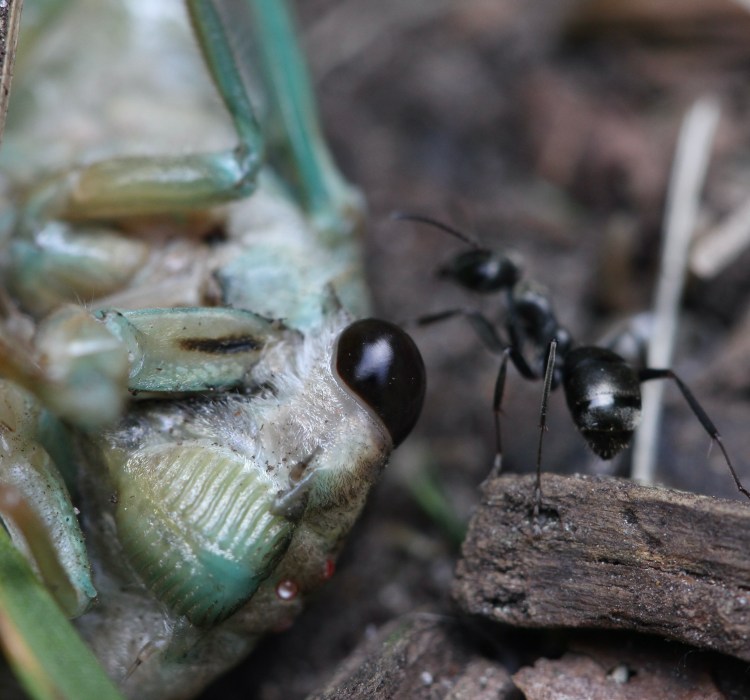
In another instance, this time in Michigan, I happened upon a dying cicada and noticed a couple of ants had also detected the large insect. Soon dozens of ants had arrived, and set about trying to cart off the giant catch.
Sometimes the camera captures events that I miss with my own eyes. Along the wavering edge of Asylum Lake in Kalamazoo, MI, I came across a virescent sweat bee, clambering out of the water in the last golden light of the day. As with all of the moments I capture, I can only speculate about the events that preceded and that would follow my observation. How did the bee end up in the water in the first place? Where did it go once I left?
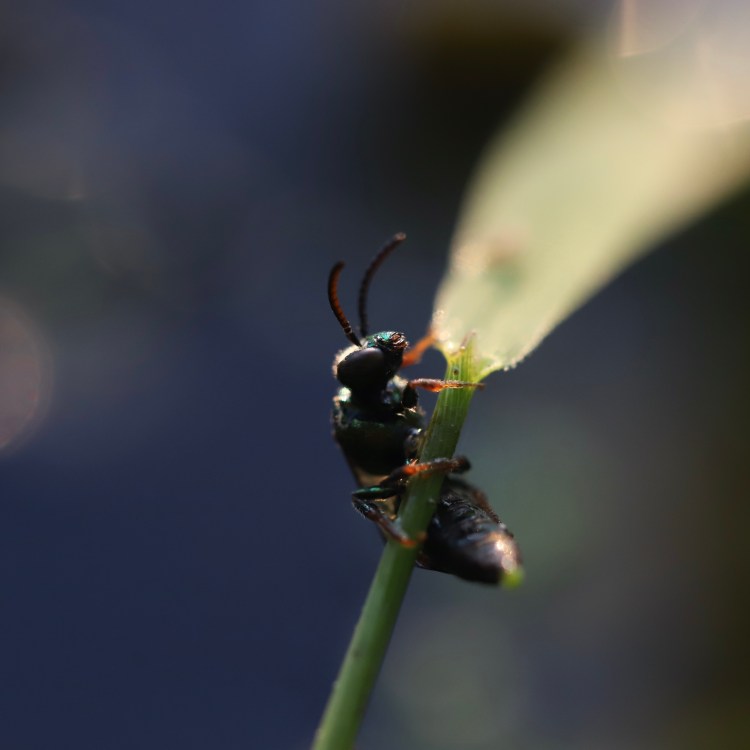
In any case, the bee had been fortunate enough to grab hold of an emergent plant stem, and it used this botanical assist to pull free of the water’s surface tension.
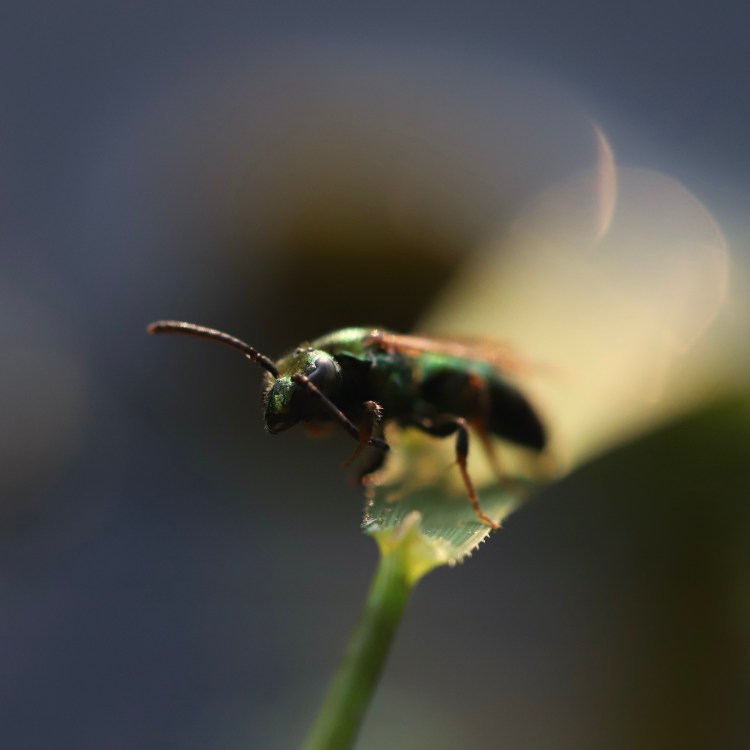
It set about cleaning its antennae, first the left one,
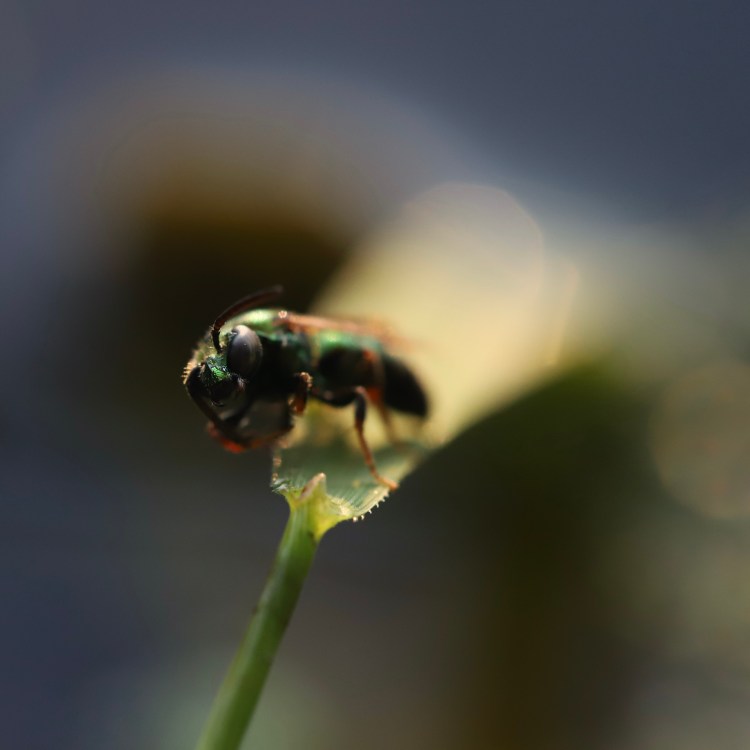
then the right.
I could observe all of this with my naked eye, but I completely missed the next event:
A much smaller insect, and one I haven’t been able to identify, soon followed the sweat bee up the stem. In this photo, it has yet to climb into focus.
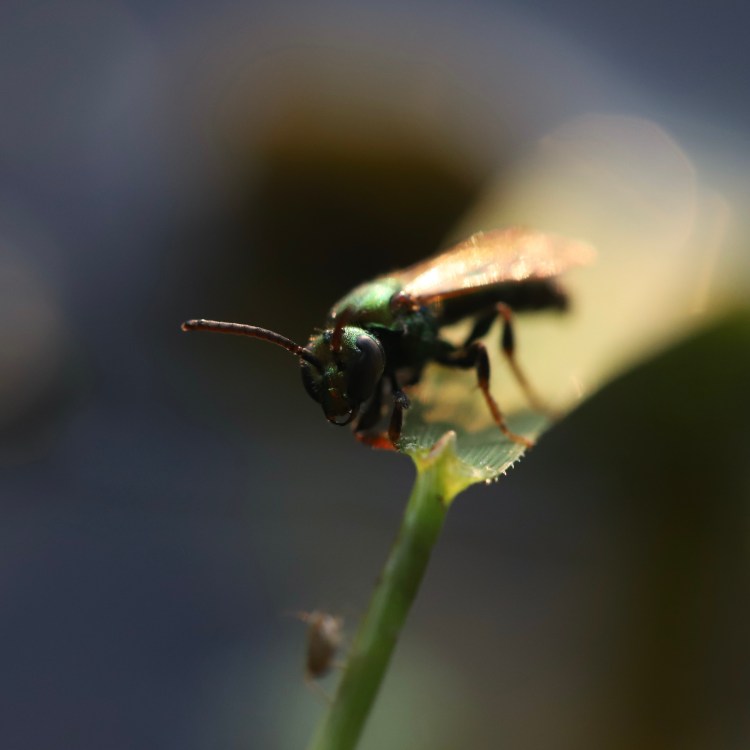
The sweat bee appears either unaware or disinterested,
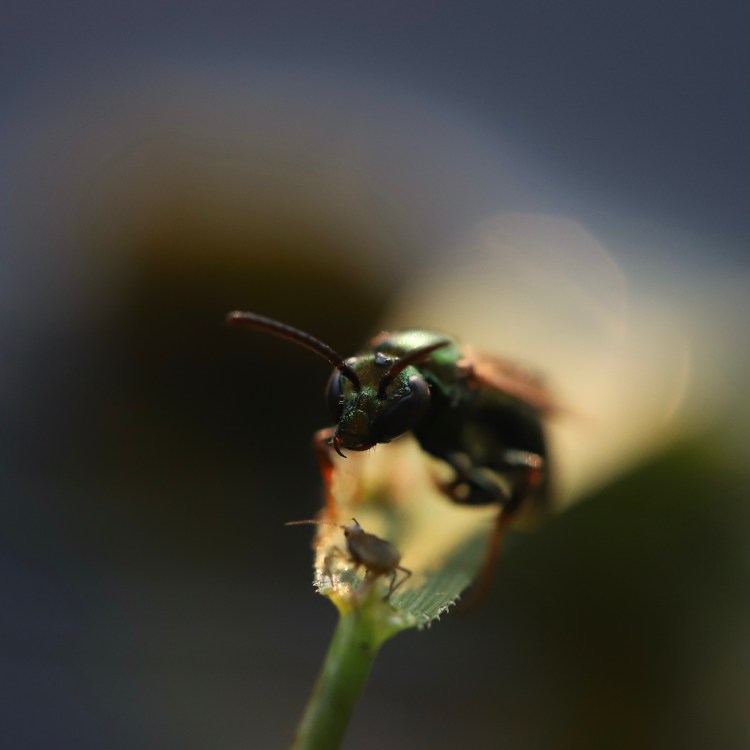
as the smaller insect passes directly beneath the bee’s fierce-looking mandibles, and continues on its way to sunnier climes. It was only in the process of editing my photos that I discovered this secondary plot.
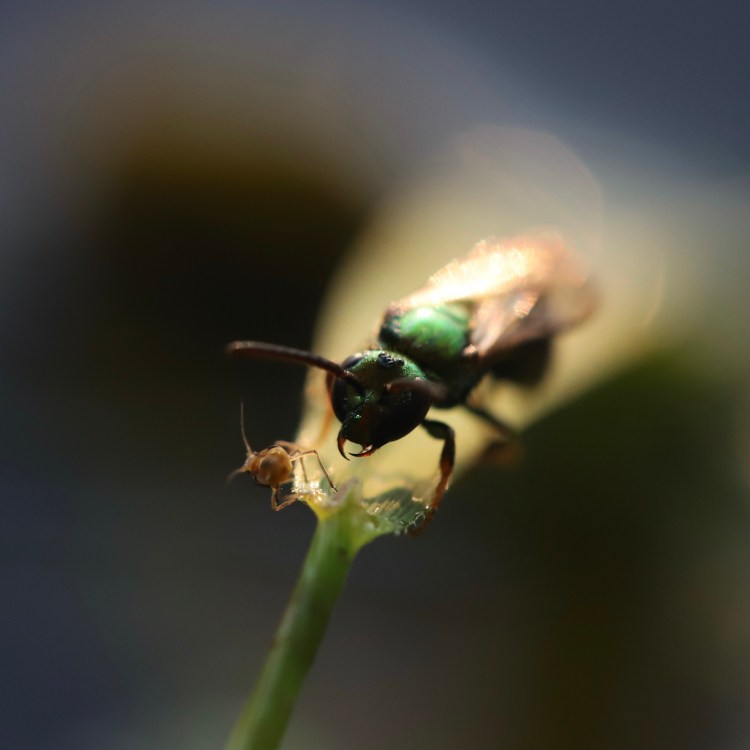
These are just a few examples of the many I have witnessed and which make up this website. I use my camera and a macro lens to explore and document the ever-surprising complexity that exists on a fine scale in my immediate surroundings. Through this site, I can share these moments with you and hopefully add some kindling to your curiosity about your own friendly neighborhood microcosmos.
Justin Davies
 Hilltop Vole Brigade and their Carbonic Vidette